
Radon, Methane, and Gas Barriers: Claiming Relief on Subsurface Environmental Protection
Find out more
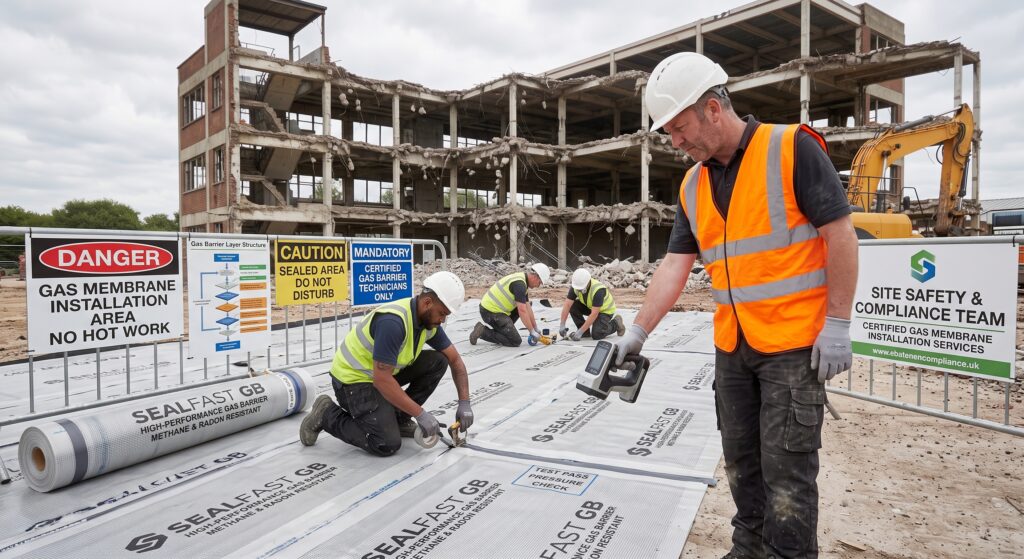
Subsurface gas hazards represent an invisible threat on brownfield development sites. Whether from naturally occurring radioactive decay (Radon) or historical landfill decomposition (Methane and Carbon Dioxide), volatile subsurface gases can migrate through soil and accumulate in building voids.
Installing specialised gas protection systems is a qualifying expenditure under Land Remediation Relief (LRR).
Qualifying Subsurface Gas Contaminants
Subsurface Gas Risks:
├── Radon Gas (Naturally occurring radioactive gas entering through bedrock fissures)
├── Landfill / Organic Methane (Combustible gas generated by decaying buried waste)
├── Carbon Dioxide (Asphyxiating gas migrating from historical mining works)
└── Volatile Organic Compounds (VOC vapors migrating from petroleum-impacted soils)
Qualifying Protection Systems and Engineering Measures
To safely develop sites impacted by ground gas, engineers install protective membrane barriers and ventilation systems under ground-bearing slabs. The material and labour costs associated with these works qualify for the 150% LRR tax deduction.
- Gas-Resistant Membranes: Material and installation costs for reinforced hydrocarbon, radon, or methane barriers laid beneath floor slabs.
- Venting Layers & Sump Systems: Installing gravel sub-floor venting layers, perforated suction pipes, and active or passive gas extraction sumps.
- Sealing Pipe Penetrations: Specialised top-hat seals and gas-tight grommets fitted around service utility entries.
Contaminant Protection Breakdown
Protection Element
| Qualifying Cost Components |
Gas Barrier Membrane | Membrane rolls, specialised tape, butyl sealant, and physical installation labor. |
Independent Integrity Testing | Third-party seam integrity testing, spark testing, and validation reporting. |
Sub-Slab Venting Layers | Granular venting stone layers laid specifically to facilitate gas dispersion. |
Case Study: Edge-of-Town Housing Scheme
A housebuilder acquired a residential development site adjacent to a historic municipal landfill. Ground gas monitoring revealed elevated methane and carbon dioxide levels, classifying the site as Characteristic Situation 3 (CS3) under CIRIA C665 guidelines. Installing sub-slab gas membranes and passive sub-floor venting across 24 housing plots cost £110,000.
SeederHeights compiled a dedicated LRR claim for the gas protection measures, securing £41,250 in Corporation Tax deductions for the housebuilder.
Ready to Maximise Your Land Remedation Relief?
Book a free 15-minute review with our specialist team. We’ll assess your eligibility and help you claim back your restoration costs—with zero hassle.