
Unlocking Land Remediation Relief: How Property Developers Turn Brownfield Risk into Capital
Find out more
Redeveloping brownfield land is central to meeting UK housing targets and urban regeneration goals. However, site preparation costs on previously developed land can strain project cash flow.
To encourage brownfield redevelopment, Land Remediation Relief (LRR)—governed by Part 14 of the Corporation Tax Act 2009—provides corporate property developers and investors with up to a 150% Corporation Tax deduction on qualifying cleanup costs.
Direct Site Cleanup Expenditure: £100,000
↓
150% Corporation Tax Deduction Applied: £150,000 Offset Against Profits
↓
Direct Cash Benefit: £37,500 Tax Saved (At 25% Main Rate) OR 16% Cash Refund for Loss-Making SPVs
Core Eligibility Parameters
To claim LRR, the property must be owned by a limited company (individuals and partnerships are ineligible) and satisfy three statutory conditions:
Acquisition Condition: The land must have been acquired in a contaminated or derelict state.
Harm Test: The site conditions must present a demonstrable risk of causing harm to humans, local ecosystems, or structural assets.
Polluter Exclusion: The company claiming the relief must not have caused the original contamination or dereliction.
Qualifying Contaminants and Environmental Hazards
- Toxic Substances: Asbestos, heavy metals (lead, arsenic, cadmium), industrial hydrocarbons, solvent residues, and coal tar.
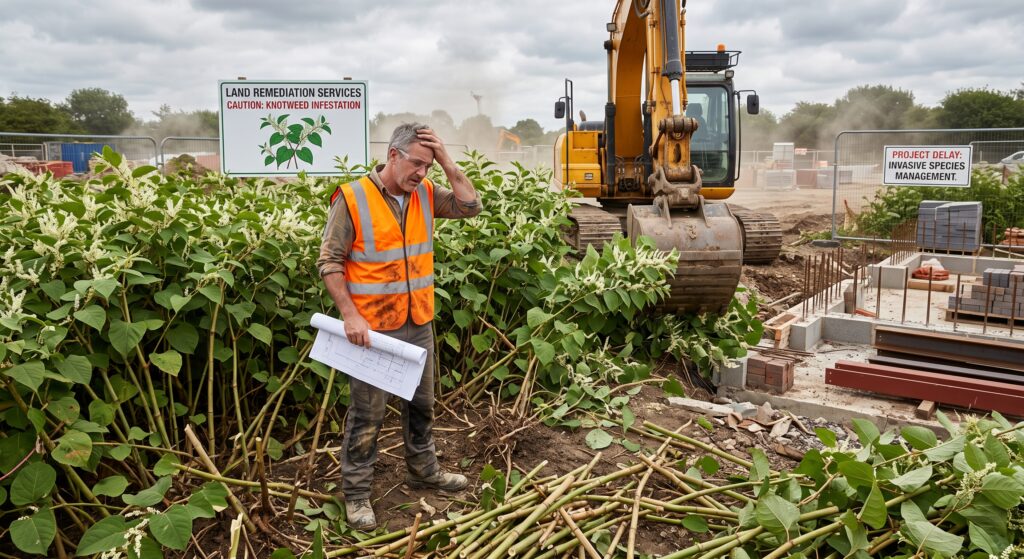
- Invasive Species: Eradicating Japanese Knotweed, Giant Hogweed, and Himalayan Balsam.
- Subsurface Gases: Installing protective membranes to block soil-gas migration from radon, methane, or landfill gas.
- Derelict Structures: Excavating buried concrete slabs, old foundations, or underground fuel storage tanks on long-disused sites.
Financial Mechanics: Profit vs. Loss SPVs
LRR offers flexible tax relief mechanics depending on the financial structure of your development SPV:
Development SPV Status | Relief Mechanic | Direct Financial Yield |
Profitable Trading SPV | 150% deduction offset against trading profits. | 37.5p per £1 spent (at 25% CT main rate). |
Loss-Making Development SPV | Surrender the land remediation loss for a 16% cash credit. | £24,000 cash refund for every £100,000 spent on cleanup. |
Case Study: Industrial Site Conversion
A regional property developer acquired a derelict former gasworks site to build 18 residential townhouses. Site investigations revealed significant hydrocarbon contamination and buried storage tanks. Groundwork remediation cost £220,000.
SeederHeights compiled a technical LRR claim under CTA 2009 Part 14. Because the developer was operating through a loss-making SPV during the construction phase, they elected to surrender the land remediation loss, securing a £52,800 direct cash refund from HMRC, significantly improving early-stage project cash flow.
Ready to Maximise Your Land Remediation Relief?
Book a free 15-minute review with our specialist team. We’ll assess your eligibility and help you claim back your restoration costs—with zero hassle.